
Why Tree Removal Should Always Be Handled by Professionals
Managing trees that have outgrown their space, become unstable, or have suffered damage requires more than basic yard maintenance knowledge. It involves careful planning, precise execution, and a strong understanding of structural behavior under varying environmental conditions. When handled incorrectly, even routine situations can escalate into costly property damage or serious safety risks.
Many property owners underestimate how quickly conditions can shift once cutting begins, especially when hidden decay or uneven weight distribution is present. What appears manageable from the ground can behave unpredictably once stress points are altered. This uncertainty is often amplified when the worksite includes confined spaces or nearby infrastructure that limits movement and escape routes.
Professional services exist to address these challenges with the right combination of experience and equipment. Whether the issue involves storm damage, disease, or landscape redesign, the process is rarely as simple as it appears from the ground level. In most cases, what looks like a straightforward task is far more complex once evaluated properly, especially when considering a full-scale tree removal.
Understanding the Complexity of Removing Trees
Assessing Structural Stability
Evaluating structural stability is one of the first and most important steps in any tree removal scenario. Professionals begin by examining trunk integrity, branch distribution, and signs of internal decay that are not always visible externally. This assessment determines whether the tree can be safely dismantled in sections or requires full directional felling.
A misjudgment at this stage can lead to unpredictable movement during cutting, which increases the risk to nearby structures and people. Experienced crews understand how weight distribution shifts as limbs are removed, which is why trained oversight is critical in complex removals. They also account for subtle lean angles that may not be obvious until tension is released. Additional reinforcement strategies may be planned before any cutting begins to further stabilize the structure.
Understanding Species and Growth Patterns
Different species grow in fundamentally different ways, which directly impacts the removal strategy. Some trees develop deep taproots, while others spread wide, shallow root systems that destabilize more easily under stress. These differences influence how a removal plan is structured from start to finish.
A well-planned tree removal accounts for these biological factors to reduce resistance during cutting and minimize unexpected resistance points. Without this understanding, even simple cuts can create hazardous torque or sudden weight shifts. Growth density and limb brittleness also affect how sections must be broken down. Seasonal growth patterns can further complicate timing decisions, especially when sap flow or leaf density increases load.
Evaluating Environmental and Site Conditions
Environmental conditions such as soil saturation, slope grade, and surrounding obstacles all play a role in how safely a tree can be removed. A tree positioned near buildings, fences, or utility lines requires significantly more precision than one in an open field.
This is where professional judgment becomes essential, as even minor miscalculations can have significant consequences. Proper site evaluation ensures that each phase proceeds in a controlled and predictable manner. Wind exposure and recent weather patterns are also factored into planning decisions. In tighter residential spaces, access routes must also be evaluated to determine safe equipment placement and movement.
Identifying Safety Risks in Professional Removal
Managing Fall Zones and Hazards
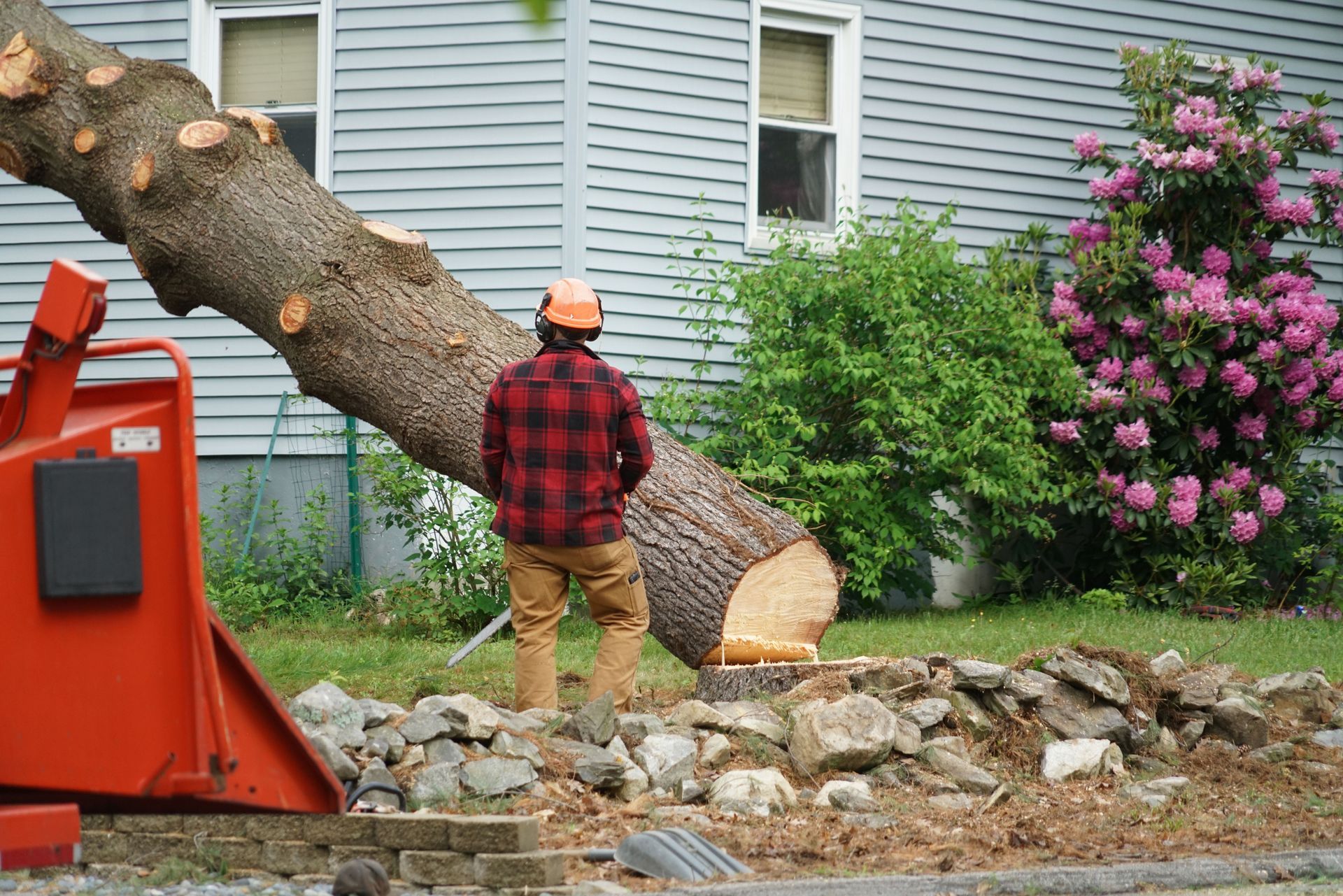
One of the most critical safety concerns during any tree removal project is establishing a clear fall zone. This area determines where branches and trunk sections are expected to land once cut. Professionals carefully calculate this space based on height, lean direction, and canopy density.
Without accurate fall zone management, debris can extend far beyond expected boundaries. This creates risks not only for property but also for anyone nearby, especially in residential environments where space is limited. Secondary drop zones are often designated to maintain layered control during dismantling. Ground communication systems are also used to coordinate movement in real time and reduce uncertainty during cuts.
Handling Specialized Equipment
Professional crews rely on specialized equipment designed specifically for controlled cutting, lifting, and lowering of heavy tree sections. Chainsaws, rigging systems, cranes, and harnessing gear must all be used in coordination to ensure safe execution.
Improper handling of this equipment can result in severe injury or incomplete cuts that destabilize the structure. In professional operations, each tool is used according to strict procedural standards that prioritize stability and precision over speed. Equipment calibration and inspection also occur before active work begins. Regular maintenance checks further reduce the likelihood of mechanical failure during demanding work conditions.
Preventing Property Damage and Injury
Preventing damage to surrounding property is one of the strongest arguments for hiring trained professionals. Roofs, driveways, landscaping features, and utility connections are all vulnerable during removal operations if proper precautions are not taken.
A single miscalculated cut can send large limbs in unintended directions, causing expensive damage. Professional crews mitigate this risk through controlled dismantling techniques that break the process into manageable stages, ensuring each section is safely guided to the ground. Spotters are often used to maintain real-time awareness of shifting conditions. In complex environments, additional protective barriers may also be installed.
Recognizing Why Professional Expertise Matters Long-Term
Ensuring Proper Timing and Efficiency
Timing plays a significant role in safe and effective tree removal. Weather conditions, seasonal changes, and tree health all influence how the process should be executed. For example, certain trees are easier to handle when dormant, while others require immediate attention due to structural instability.
According to This Old House, the time required for removal can vary significantly, with jobs taking anywhere from about 15 minutes to several hours depending on the tree's size and type. This range illustrates why professional evaluation is essential before any work begins, as efficiency depends entirely on correct assessment and planning.
Protecting Landscape Health
Beyond removing the tree itself, professionals consider the long-term health of the surrounding landscape. Root systems can extend far beyond visible boundaries, and improper extraction may disrupt nearby vegetation or soil stability.
Careful removal techniques help preserve the integrity of adjacent plants and prevent unnecessary damage to the ecosystem of the property. In many cases, proper execution can improve nutrient flow in the soil and reduce competition among remaining vegetation. Restoration planning is often considered immediately after completion. This forward-looking approach helps maintain balanced growth conditions across the entire property.
Delivering Reliable and Insured Work
Reliability is a key factor when selecting a qualified service provider. Licensed and insured professionals bring accountability to every stage of the process, ensuring that both safety standards and legal requirements are met.
This level of protection is particularly important in high-risk environments where unexpected complications can arise. Homeowners benefit from knowing that any unforeseen issues are covered, reducing financial exposure while maintaining confidence in the outcome of the project. Documentation and procedural consistency further strengthen accountability.
Tree management is not simply a matter of cutting and clearing. It requires careful evaluation, technical skill, and a deep understanding of how environmental and structural factors interact. From initial assessment through final cleanup, each stage carries its own set of risks and considerations that demand professional oversight.
When performed correctly, tree removal protects both property and surrounding landscapes while ensuring long-term safety and stability. Relying on trained experts ensures that the work is completed efficiently, responsibly, and with attention to detail that is difficult to replicate without specialized experience. For a reliable tree service you can count on for safe tree removal, reach out to R & K Complete Landscaping Service!


Share On: